The practical details · 5 minute read
How to choose the right size wall art
Measure your wall, allow for a frame and try a paper template. A practical guide to choosing print sizes for sofas, beds and smaller corners.
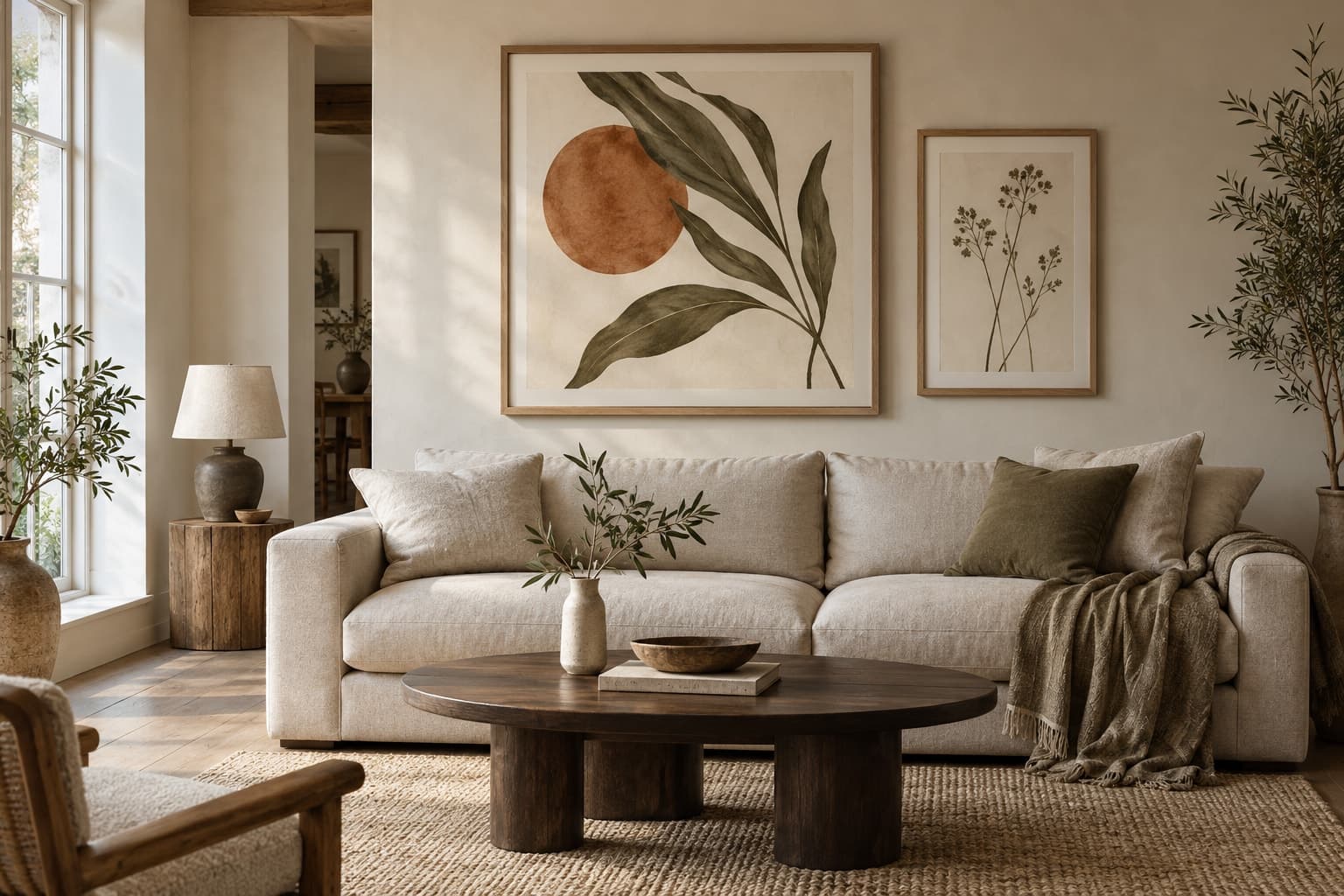
A room styling illustration. Artwork, frames and furniture are shown for inspiration; scale is not a product specification.
Begin with the furniture, then the wall
A print can feel too small on a large empty wall even when it looked generous on your screen. Start by measuring the piece of furniture beneath it: a sofa, headboard or sideboard gives the artwork a useful visual anchor.
As a loose styling starting point, try a single framed piece or a group spanning around half to two-thirds of that furniture’s width. This is a proportion to experiment with, not a rule. A low ceiling, wall light or nearby window may call for a smaller arrangement.
Measure the finished frame
Print dimensions describe the paper, unless the product page says otherwise. The mount and frame add to the final footprint. A generous mount can make a modest print feel much more substantial, but it also needs room on the wall.
Check the frame’s outer measurements and its mount opening before buying. The opening must suit the artwork you want to show. Our print listings are unframed; the frames in room images are styling suggestions.
| Paper size | Dimensions | A useful place to try it |
|---|---|---|
| A4 | 21 × 29.7 cm | A shelf, narrow wall or small grouping |
| A3 | 29.7 × 42 cm | Above a bedside table or as part of a pair |
| 50 × 70 cm | 50 × 70 cm | A more prominent focal point |
Paper proportions matter
A4 and A3 have the same proportions, while 50 × 70 cm is slightly different. Neither is the same as a 2:3 artwork. Keeping a composition intact may mean leaving a border; filling the sheet may require a crop.
The dimensions above are a general reference, not a promise that every design is available in every size. Check the chosen product’s current options and border details. Never assume that a room mockup shows the precise size or crop you will receive.
Try the shape before making holes
Cut spare paper to the finished frame’s size, including its mount. Hold it in position or use a wall-safe method suitable for your paint finish. Step back to the doorway and sit in your usual spot. A position that works standing up can look quite different from the sofa.
- Measure the width and height of the available wall area.
- Mark the centre of the furniture, then test the centre of the frame against it.
- Leave a comfortable visual gap above the furniture and check that nobody will knock the frame.
- For a pair, include the gap between the frames in your total measurement.
Small can still feel intentional
Not every wall needs a large piece. A small botanical study above a bedside table or beside a reading chair can create a lovely close-up moment. Keep it connected to something nearby rather than floating alone in a wide expanse.
If one print feels lost, try a second complementary piece at the same height. Matching frame finishes and a consistent gap often bring more cohesion than choosing a larger image alone. When you are ready to hang it, use fixings appropriate for the frame’s weight and your wall construction.